
Achievements and shortfalls in global lunar exploration in 2025
Notable developments organized by country or region
Here’s a comprehensive, curated, and contextualized linked list of lunar technology and science developments across 2025, organized by country or region. There is also a section on progressive cooperative & collaborative international efforts—because these are the gems we need more of—as well as a section discussing shortcomings in the same. If someone asks you what’s happening at the Moon, say all of this is.
China
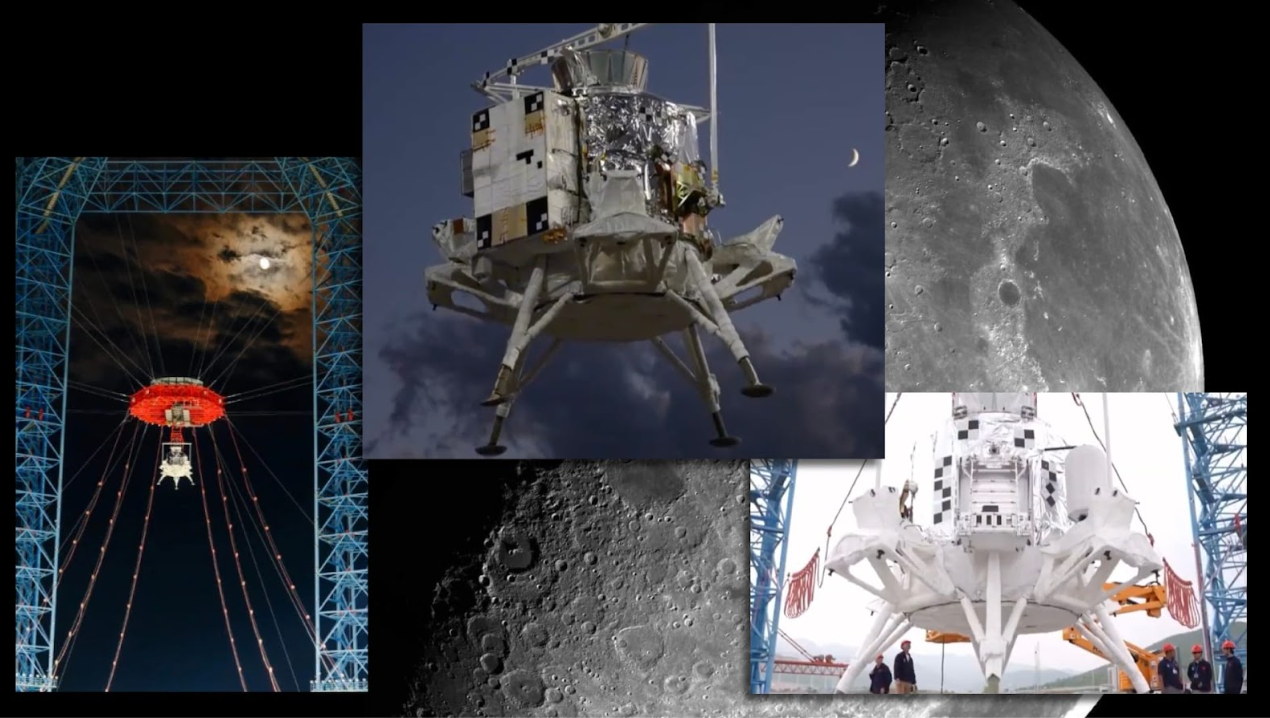
Shots from the control systems test of China’s Lanyue lander design for crewed Moon missions. The full-scale lander mockup is seen next to humans in the inset image at the bottom right. Images: CASC / CMSA | Graphic: Jatan Mehta
Chinese researchers published a volcano of novel lunar science results based on freshly fetched Chang’e 6 Moon samples, and presented it at a symposium. These findings have changed our understanding of our Moon’s origin and evolution, and have helped scientists globally identify new, specific measurements future missions should make for better outcomes.
China also announced the first set of international organizations whose proposals were selected to study unique lunar samples fetched to Earth by CNSA’s Chang’e 5 mission in 2020. And the nation displayed Chang’e samples at the United Nations headquarters for the first time.
China progressed on many elements which will help it land humans on the Moon by 2030, notably including successful tests of the launchpad escape system, lander propulsion, and the rocket booster core stage.
The country cemented and further advanced its lead in building a lunar communications and navigation network, demonstrated automated navigation at the Moon, and achieved the first ever daytime Earth-Moon laser distance measurements with a retroreflector on a lunar orbiter.
China progressed well in preparations towards the launch of its Chang’e 7 mission to the Moon’s south pole in the second half of 2026 as planned to study water ice and other volatile resources.
Building on Chang’e 7’s international cooperation, CNSA announced more international payloads that will be onboard the Chang’e 8 mission to further explore the Moon’s south pole starting 2028.
The US
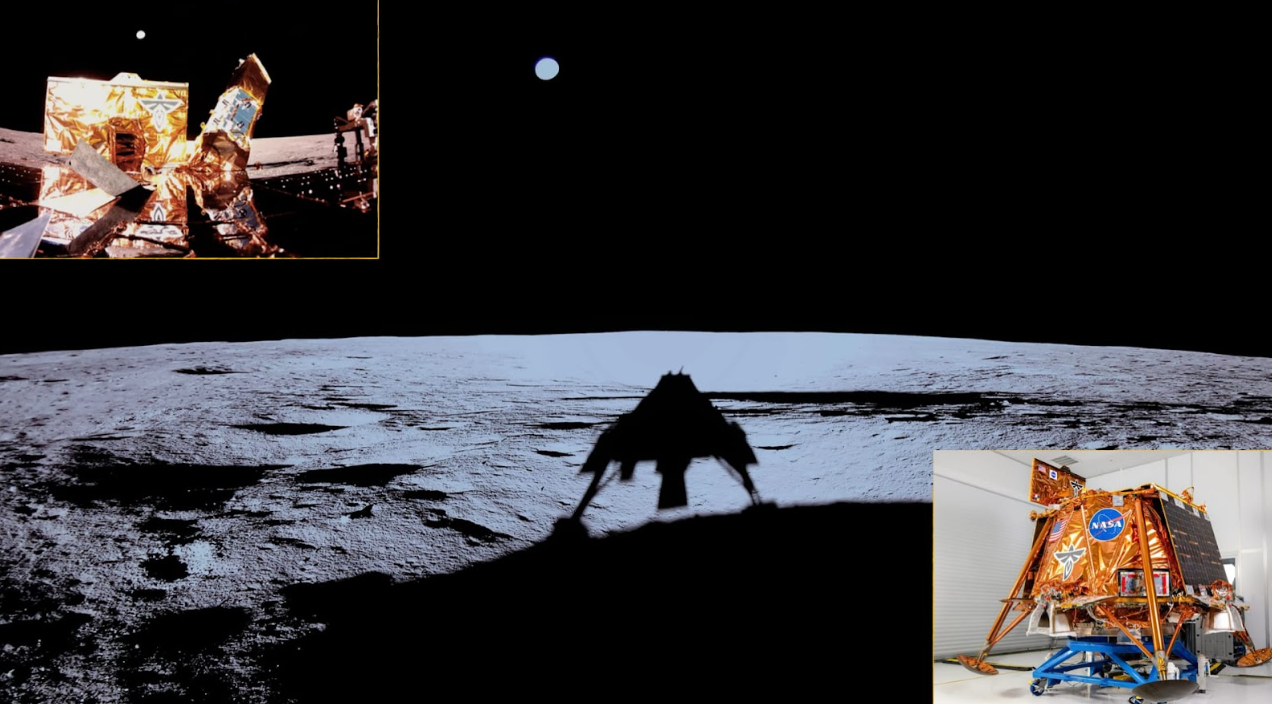
The Blue Ghost lander’s shadow standing tall on the Moon, lying under a black sky with our Earth hanging by the distance; Inset left: Blue Ghost with its X-band antenna deployed; Inset right: The Blue Ghost lander on Earth prior to launch. Images: Firefly
With rigor and abundant caution, Firefly’s Blue Ghost spacecraft part of NASA’s CLPS program brought the first true soft landing for the US in the 21st century, involving operations of its science & technology payloads, a precision landing, the first GPS/GNSS lock on the Moon, and a stunning solar eclipse capture. Firefly also won its fourth CLPS Moon landing contract, which will deliver three NASA-funded instruments as well as two rovers to the Moon’s south pole at the end of the decade.
In March, Intuitive Machines’ second CLPS craft hard-landed on the Moon’s south pole and came to rest on its side, which led to the mission being unsuccessful across all of NASA’s primary goals of studying local water ice.
NASA completed a majority of the preparations and safety improvements to fly four Artemis II astronauts around the Moon and back sometime in early 2026.
Due to three back-to-back failures of SpaceX Starship, an explosion during testing, and another booster lost, NASA’s long road to putting humans on the Moon with Artemis III significantly slowed down. This led NASA’s Acting Administrator Sean Duffy to reopen the landing contract for accelerated proposals. Duffy also named Amit Kshatriya as the agency’s new Associate Administrator to accelerate Artemis III. Kshatriya previously led NASA’s Moon to Mars Program Office for planning and implementing Artemis missions.
In the meanwhile, Blue Origin’s successful launch of its New Glenn rocket in January followed by another in November finally opened up a second line of pursuit for NASA to send lunar astronauts vis-à-vis Blue Moon. Blue Origin aims to launch its first robotic Blue Moon ‘Mark I’ lander in 2026 as testing and design validations ahead of crewed flights. Based on that, NASA tentatively chose Blue’s second Mark I lander flight to carry the agency’s VIPER rover, whose mission to study polar water ice has been critical yet deprioritized.
The Trump administration’s budget request for NASA for FY 2026 proposed a historic ~25% cut while the agency went a whole year without an official Administrator. Notably, the Moon-related proposals of the budget and its evaluations do nothing to address the fact that the US has been failing to explore lunar water as the principal goal of Artemis.
After nearly six months of trying to establish communications with the Lunar Trailblazer spacecraft post its February launch, NASA declared an end to the rescue efforts and the mission. The agency-funded Trailblazer was supposed to provide scientists with unprecedented, high-resolution global orbital maps of the amount, distribution, and state of lunar water.
In February, Blue Origin simulated two minutes of lunar gravity inside the New Shepard crew capsule. NASA funded this project, and tested 17 lunar-relevant payloads onboard. As such, NASA continues leveraging New Shepard’s suborbital flights to help verify and refine new lunar technologies at relatively low costs before they can be sent to the Moon.
NASA un-nuked its decision to not use nuclear power on the Moon. Relatedly, Zeno Power raised $50 million, a major chunk of which will go towards developing and demonstrating the company’s nuclear electric power system on the Moon for NASA by 2027.
India
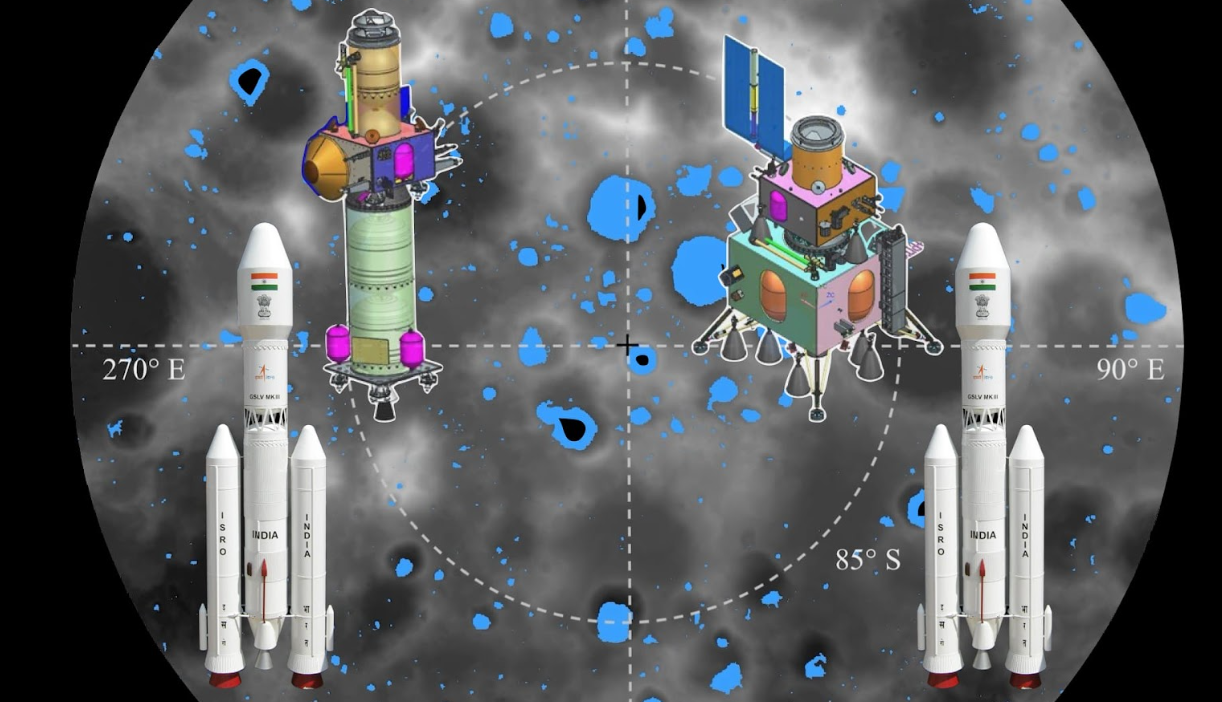
Graphic: Jatan Mehta | Individual images of the LVM3 rocket, the two Chandrayaan 4 spacecraft stacks, and the Moon’s south pole: ISRO / NASA / GSFC / Timothy McClanahan / LOLA
Results from the thermal probe experiment on India’s Chandrayaan 3 lander expanded the possible locations for finding water ice beyond the Moon’s poles, thereby benefiting future scouting missions. There are also several notable outcomes from other instruments on the lander.
The Chandrayaan 3 rover may or may not have stumbled upon the Moon’s mantle material when studying the composition of the local lunar soil using its X-ray spectrometer.
ISRO’s Chandrayaan 2 orbiter helped international researchers produce a galore of science results, notably including continued characterization of the lunar poles using its advanced radar to map potential water ice deposits and gauge surface roughness, densities, and porosities. The orbiter also helped scientists better understand the Sun’s activity and how it affects the Moon’s exosphere.
ISRO continued development and planning of the ambitious Chandrayaan 4 mission to bring lunar polar samples—albeit at a slower pace than expected.
India finally approved the joint ISRO-JAXA Chandrayaan 5 / LUPEX mission to drill and analyze water ice on the Moon’s south pole. The mission will bring a giant leap in lunar capabilities for both ISRO and JAXA, and it can provide NASA with data critical for Artemis planning currently missing from US missions.
ISRO revealed its eventual crewed Moon mission’s initial architecture.
More Asia-Pacific
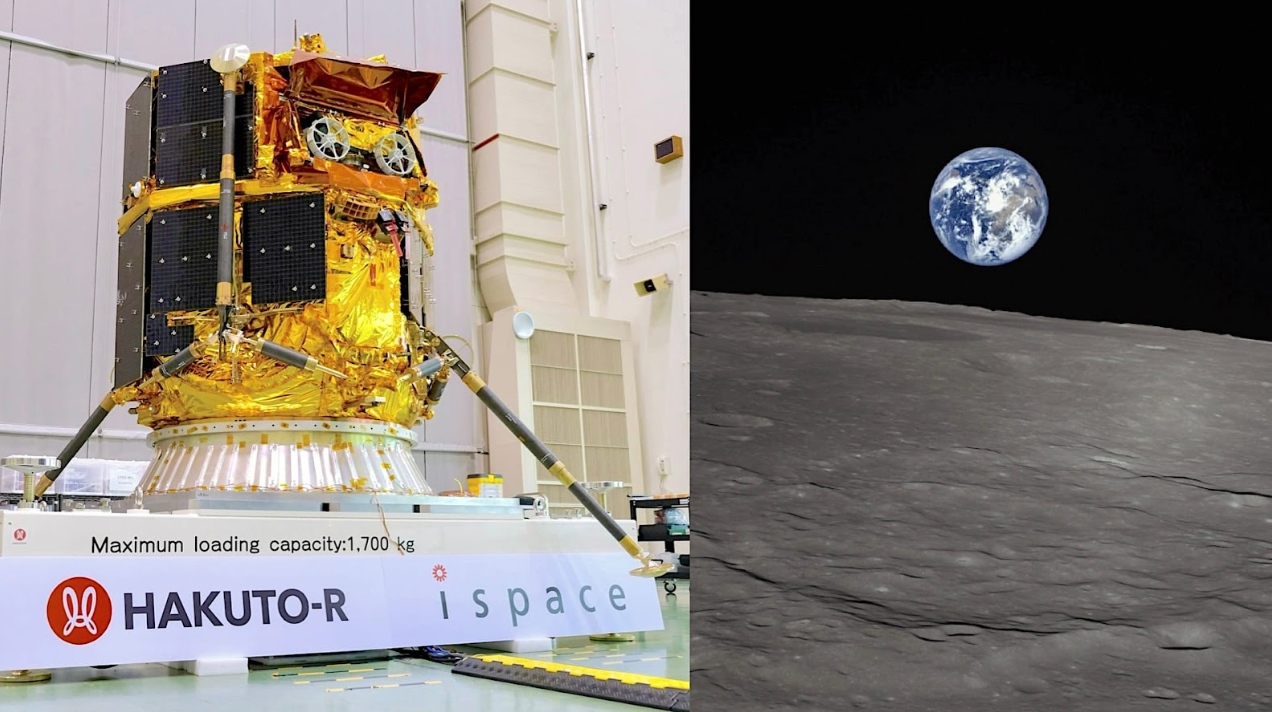
Left: ispace Japan’s second Moon lander, named RESILIENCE, at JAXA’s Tsukuba Space Center pre-launch. Also seen integrated into the lander is ispace’s first rover TENACIOUS; Right: Our Earth as imaged by RESILIENCE from lunar orbit. Images: ispace
ispace Japan’s second Moon lander RESILIENCE crashed on the Moon due to performance issues of the laser rangefinder. The outcome underscores the need for resilience in private lunar landing missions through expansive and collaborative testing. ispace notably continued its remarkable transparency from the first failed landing attempt, sharing detailed findings of what went wrong in mere weeks.
In October, Japan successfully demonstrated a cargo delivery to the International Space Station using its next-generation HTV-X spacecraft. A variant of it called HTV-X(G) will deliver astronaut supplies to the upcoming NASA-led Gateway lunar orbital habitat starting 2030.
ispace was selected as part of Japan’s 1-trillion yen “Space Strategy Fund” initiative to develop, launch, and operate a lunar orbiter which will use a terahertz wave sensor system to locate and map water ice deposits on the Moon’s poles. Data from this orbiter will be analyzed in tandem with direct surface and subsurface measurements made by the upcoming joint Indo-Japanese LUPEX mission.
South Korea approved plans made by the country’s newly forged space agency KASA to build a Moon lander by 2032 as part of a broader $500+ million annual investment in indigenous space technologies. South Korea is also transforming the former mining site of Taebaek into a testing ground for advanced mobile lunar exploration technologies, owing to the mine’s environmental resemblance to the darkness, coldness, and ruggedness of the Moon’s south pole.
The Australian Space Agency (ASA) continues funding local companies to build lunar technologies. In February, ASA particularly supported EntX to develop a radioisotope heater unit to enable future landers and rovers to survive frigid lunar nights.
Europe
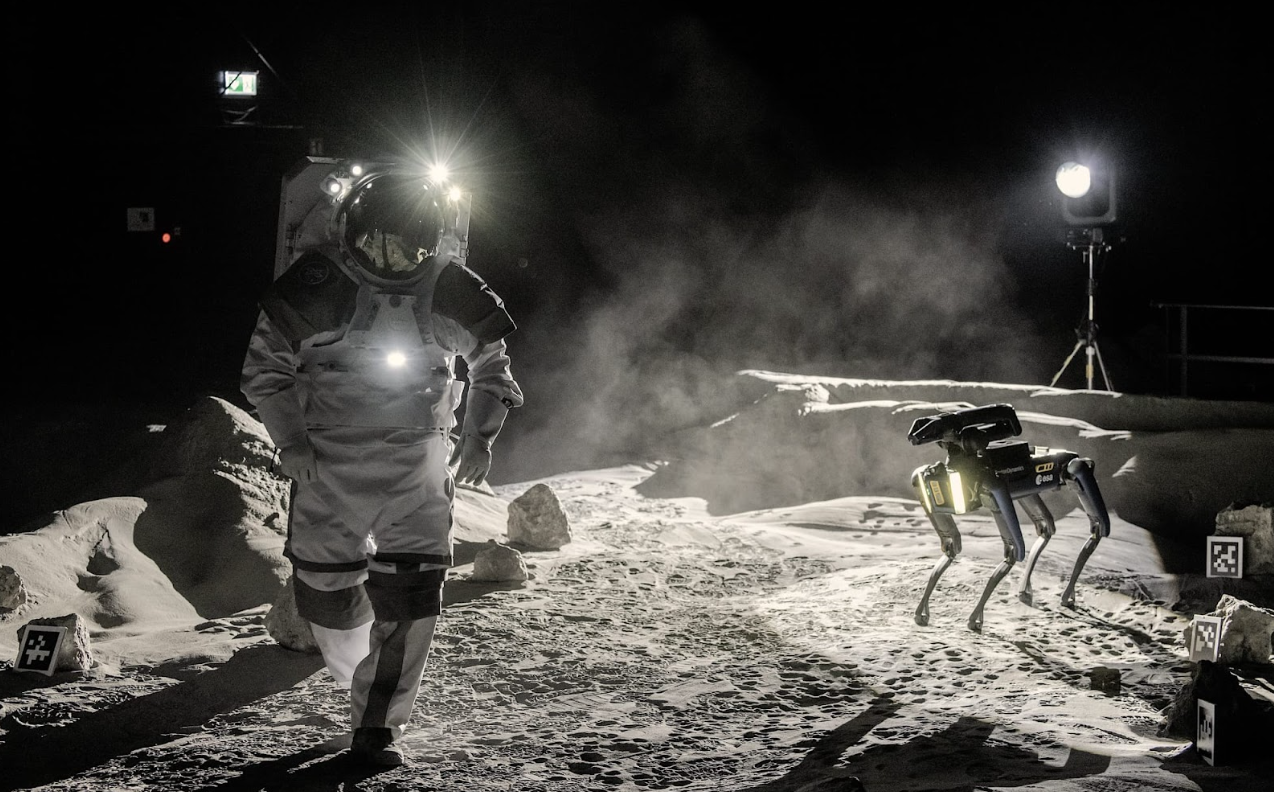
An ‘astronaut’ and a robot in the Moon-simulating LUNA testbed on Earth. Image: DLR / ESA
ESA started testing instruments, mission concepts, modern astronaut tools, and water ice detection strategies at its new, versatile Moon-simulating LUNA facility in Germany. A simulated habitat module now adjoins LUNA to better test complex mission scenarios wherein humans and robots interact in varied ways for long periods so as to plan future Moonbases.
ispace’s European subsidiary led team won a ~€2.7 million ESA contract to collaborate with the agency on the MAGPIE rover mission to study lunar polar water ice and other such volatiles.
In January, ESA announced a $882 million contract to a European consortium led by Thales Alenia Space for developing the Lunar Descent Element of the agency’s upcoming large Moon lander Argonaut. Launching no earlier than 2031, Argonaut plans to deploy about 2,000 kilograms of infrastructure payloads or astronaut supplies on the Moon with each flight.
The Italian Space Agency (ASI) awarded a preliminary design contract to a group led by Thales Alenia Space to develop a multi-purpose astronaut habitat module which will be part of NASA’s hoped for Artemis Basecamp on the Moon next decade. The 15,000-kilogram module will have wheels so it can reposition itself as needed on the dynamically lit lunar polar surface.
Collaboration and cooperation progress
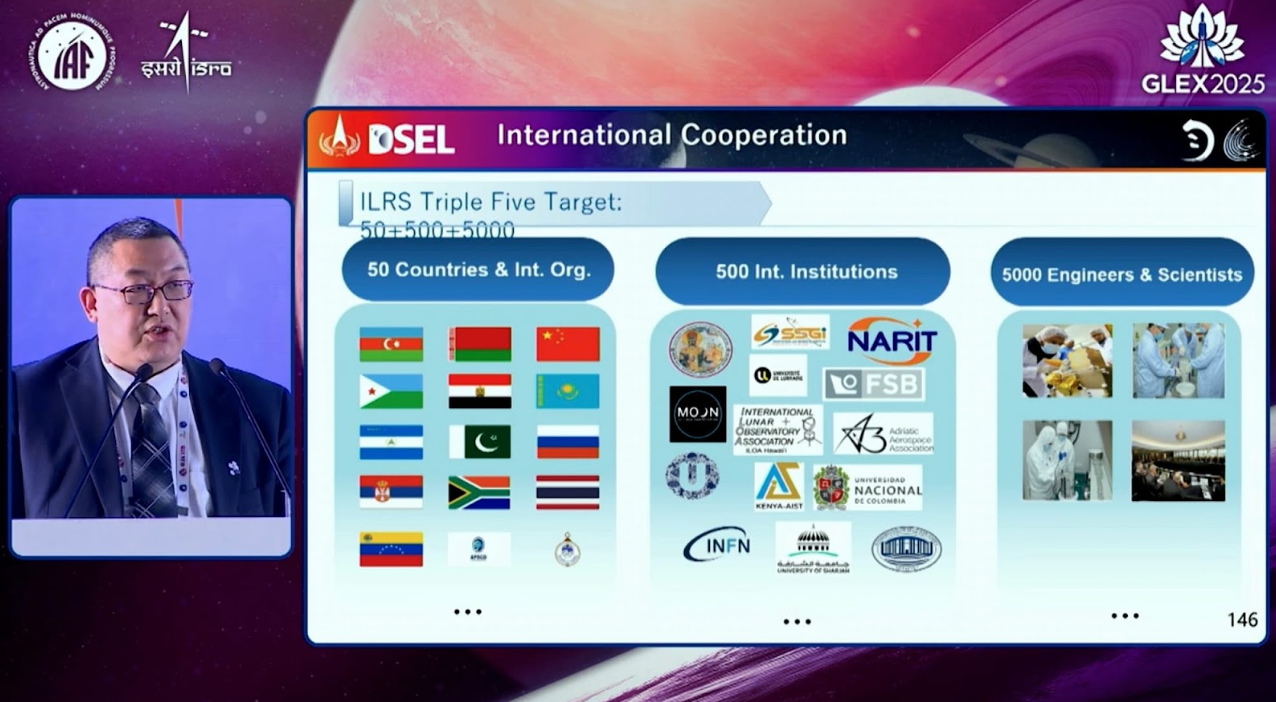
Zhongmin Wang, Director of international cooperation for China’s lunar and deep space missions, speaking at GLEX 2025 on international cooperation in the Sino-led ILRS Moonbase project. Image: CNSA / DSEL / IAF
The US-led Artemis Accords for cooperative lunar exploration reached 60 signatories.
China hosted an international symposium on lunar samples with the right intent and effort to enhance its planetary science cooperation. China also formally welcomed India to cooperate on Moon missions and the Sino-led ILRS Moonbase project.
Cooperative analog astronaut missions and related training continued worldwide.
ESA and NASA progressed on building technologies for future lunar construction.
Open Lunar Foundation launched the Lunar Ledger project. The Ledger aims to be a database of global lunar objects and activities to improve mission operator transparency by enhancing information sharing wherever possible.
A great example of asynchronous collaboration: To enable efficient exploration by small lunar rovers, which have limited resources and function under the harsh lunar environment, the Japan-based company JAOPS built a lunar surface simulation suite (here’s a demo video) aided by simulated rover camera and sensor data and past missions. This is helping train rover operators amid real mission control setups. Notably, much of the work is open source on GitHub and also converges open source elements from actors worldwide.
Cooperation shortfalls
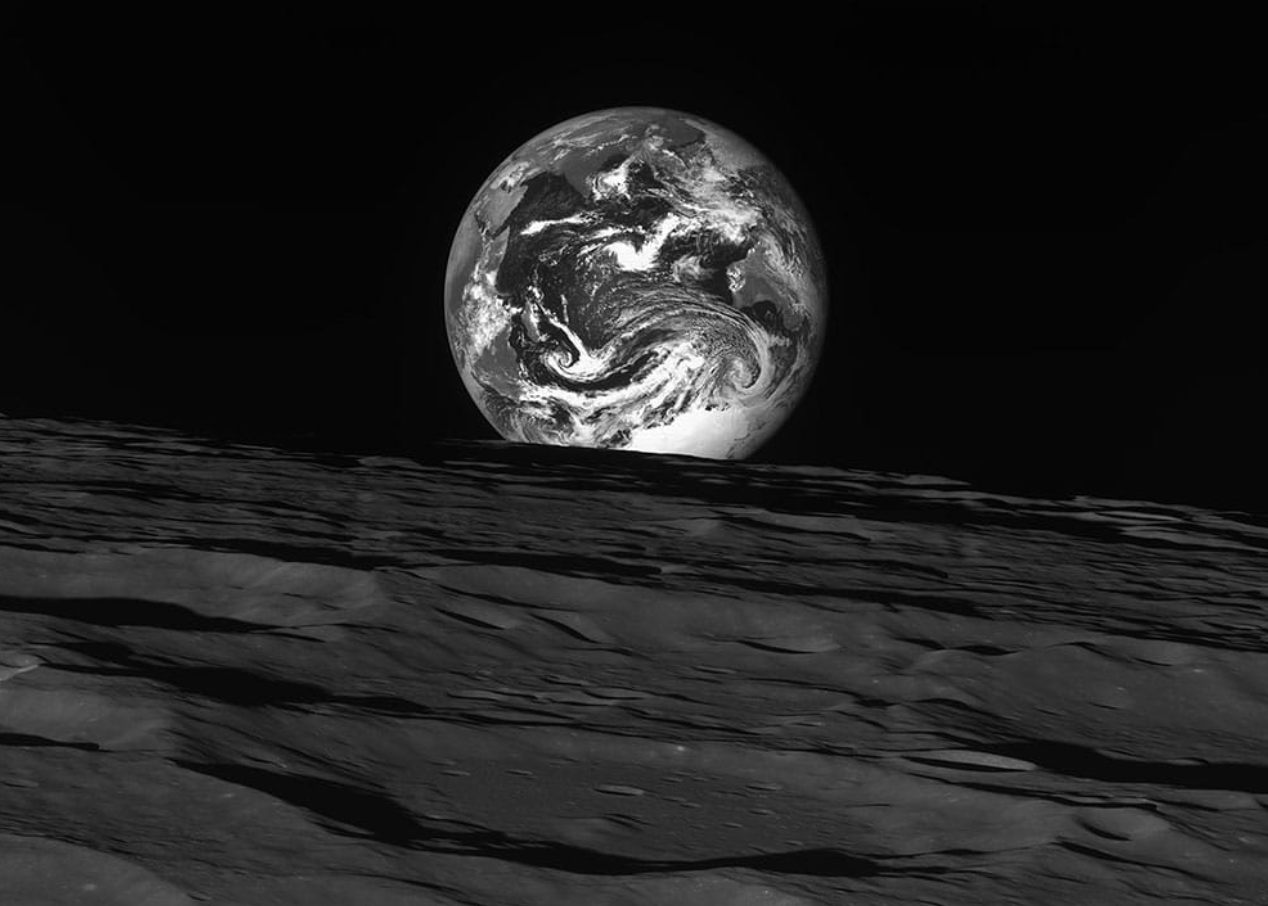
Our Earth on the Moon’s horizon as imaged by South Korea’s KPLO lunar orbiter. Image: KARI
We’re building future technologies for the Moon without closing missed milestones. 🕳️
Western media narratives misrepresent Chinese space, which reduces trust and deters cooperation and collaboration. Also see Jack Congram’s piece China is not racing to the Moon. Moreover, Erika Nesvold made the case of the US not having presented a coherent argument for the country’s self-imposed claim of defeating China in the new lunar “Space Race”.
Why Moon missions need their own Wikipedia and beyond and improved information sharing
A giant leap in orbital imagery is what we need to realize advanced Moon missions
Moon missions can be cheaper, safer, and better if more countries share navigation and timing infrastructure. Relatedly, US-based Intuitive Machines and Europe-based Leonardo & Telespazio agreed to have interoperability between their communications and navigation orbiters.
So that was a comprehensive look at all the ways countries explored our Moon in 2025 [originally published by our Science Communications Lead, Jatan Mehta, on Moon Monday]. If you’re passionate about humanity’s exploration of our cosmic companion and want to cheer on for more and better collaborative endeavors along the way, please share this article with other space buffs.
